Black Holes are fascinating celestial bodies. They are predicted by Einstein’s theory of general relativity even though Einstein himself was not particularly fond of them.
We can now finally “see”, “hear” and “feel”them. We can “feel” their presence in the Universe via their gravitational interactions affective the rotation speed of nearby stars. In fact, super-massive Black Holes are present in the centre of most galaxies with masses between hundreds and several billion solar masses. Recently, we could “see” them by imaging the region near super massive Black Holes (Event Horizon Telescope).
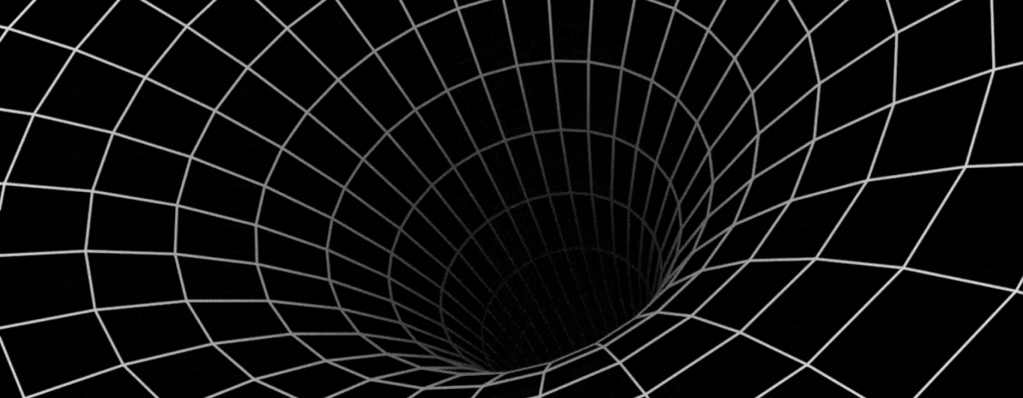
We can “hear” stellar mass Black Holes, produced at the end-point of a heavy star life, via their gravitational wave signals observed by the LIGO/VIRGO interferometers.
But put together general relativity and quantum mechanics and you discover that Black Holes are not as black as one originally thought. In fact, Hawking predicted that these objects evaporate by emitting particles, like light particles! What is mind-bending is that these steaming pots have temperatures inversely proportional to their masses. This means more massive they are the colder they are and the smaller (less massive) the hotter they are. If you run your computations you find out that Black Holes heavier than a few solar masses are stable because they are colder than the cosmic microwave background. Therefore, smaller Black Hols are expected to emit Hawking radiation that could potentially be observed. These asteroid-size Black Holes could have been produced in the early Universe, and constitute a potential candidate for dark matter if sufficiently long-lived. The Hawking radiation stemming from these primordial Black Holes is constrained by measuring the diffuse gamma ray background.
In our recent work https://arxiv.org/pdf/2405.12880 we investigated the observational impact of the production of a large number of Black Holes morsels (in Italian Bocconcini di Buchi Neri) imagined to form during a catastrophic event such as the merger of two astrophysical Black Holes. We showed, the Hawking radiation stemming from these Black Holes morsels gives rise to gamma ray bursts (GRBs) possessing a distinctive fingerprint.
Since visible signals from Black Holes evaporation always entail photons above the TeV energy, the expected signals is a golden opportunity for high energy atmospheric Cherenkov telescopes like HESS, HAWC and LHAASO.
There is therefore a chance for measuring, for the first time, the Hawking radiation emitted by Black Hole morsels assumed to form in catastrophic astrophysical events such as black hole mergers.
If measured, the Hawking radiation will help us investigate the intimate link between gravity and quantum mechanics and perhaps even have a first glimpse at a more fundamental quantum theory of matter and space.

 Quantum matters